Jazz Dance Basics: 10 Basic Moves and Positions
Key Takeaways
- Jazz dance combines ballet technique, African-American rhythm traditions, and theatrical personality into one of the most versatile styles you can learn
- The foundational jazz dance steps are: jazz walk, ball change, jazz square, chassé, kick-ball-change, pas de bourrée, pivot turn, plié, isolations, and shimmy
- Body isolation is the core technique that makes jazz feel like jazz: learning to move your chest, hips, and head independently is essential from day one
- Always warm up before your first session and practice in front of a mirror to catch alignment issues early
- A lightweight, flexible dance sneaker with pivot support makes learning pivots and direction changes significantly easier and safer
Jazz dance has a reputation for looking effortless. It is sharp, expressive, and full of personality. What you do not see from the outside is how accessible it actually is to start.
The beginner jazz dance moves are a small set of repeating patterns. Once you know them, they show up everywhere. In every routine, every style, every class. The steps you learn this week are the ones you will still be using in your most advanced choreography.
This guide covers all ten foundational moves, how to do them correctly, common mistakes to avoid, and your first combination. No experience required.
What Is Jazz Dance?

Jazz dance is a style rooted in African American musical and movement traditions that grew alongside jazz music in New Orleans from the early 1900s. By the 1920s it had reached mainstream audiences, largely through the Charleston style and its appearance on the Broadway stage.
Today jazz lives in studios, on Broadway, in music videos, in competitive dance, and in commercial performance contexts across every genre. It is known for its energy, sharp accents, and deeply expressive quality. The style builds on a ballet technique foundation and layers on rhythmic musicality, body isolation, and individual personality.
That combination is what makes it uniquely rewarding to learn. Jazz is both technically demanding and deeply personal.
Before You Start: The Core Concepts

Two ideas underpin everything in jazz. Understand these before you learn a single step.
Body isolation. Jazz dance steps require moving parts of your body independently. Shift your chest to the right while your hips and shoulders stay still. Roll your hips while your upper body stays level. Move your head side to side without moving anything else. This is isolation, and it is the technique that gives jazz its distinctive visual character. Practice it in front of a mirror before you add footwork.
Rhythm and musicality. Jazz is a conversation between music and movement. Listen for the beat, find where the accents fall, and let the music tell you where the energy goes. A technically perfect step that ignores the music is not jazz dancing. A slightly rough step that lands exactly on the beat is.
The 10 Foundational Jazz Dance Moves
1. The Jazz Walk

The jazz walk is nothing like your everyday stride. It is stylized, low, and full of attitude.
Step forward with your weight landing on the ball of your foot first, then roll through to the heel. Keep your knees slightly bent in a soft plié. Let your hips sway naturally and hold your shoulders relaxed but confident.
This is your primary traveling step and your first opportunity to add personality to your movement. The arms can swing naturally, hold a shape, or add a snap. The walk itself is the foundation for everything.
2. The Ball Change
The ball change is the rhythmic heartbeat of jazz. It is a quick two-step weight shift that shows up in almost every combination.
Step back onto the ball of one foot (the ball). Immediately rock your weight forward onto the other foot, flat on the floor (the change). The rhythm is a quick "and-one," two movements packed into two beats.
Once it is in your muscle memory, the ball change will connect virtually every other step you learn.
3. The Jazz Square
One of the first steps most dancers learn, and one that appears in nearly every beginner routine.
- Count 1: Step forward with your right foot.
- Count 2: Cross your left foot over the right.
- Count 3: Step back with your right foot.
- Count 4: Step your left foot out to the side, returning to your starting width.
Add some attitude in your upper body and accent the motion. Once you feel comfortable, play with arm positions and head changes to make it feel more personal.
4. The Chassé

Chassé comes from French meaning "to chase." One foot chases the other out of its spot.
For a side chassé:
- Count 1: Step to the right with your right foot.
- And: Bring your left foot quickly to meet your right (feet briefly together).
- Count 2: Step to the right again with your right foot.
The rhythm is "step-together-step." Chassés can travel in any direction and appear in virtually every jazz routine as both a standalone move and a transitional step between bigger moments.
5. The Kick-Ball-Change
Take the ball change and add a kick at the front. That is the kick-ball-change.
- Kick one leg forward.
- Step back onto the ball of the kicking foot.
- Transfer your weight forward onto the other foot.
The full sequence lands as "kick-and-change." Three movements, two beats. It is syncopated, punchy, and one of the most satisfying jazz steps to nail because you can feel it locking into the music.
6. The Pas de Bourrée
The name sounds complicated but the pattern is simple: back, side, front.
- Step back with one foot onto the ball of that foot.
- Step to the side with the other foot.
- Step forward with the first foot.
This three-step transition is used constantly in jazz to link bigger movements together. Think of it as the punctuation between sentences. It can be done with tiny steps or larger strides depending on the routine.
7. The Pivot Turn
The pivot turn is how jazz changes direction cleanly without breaking the flow of movement.
- Step forward on your right foot.
- Keeping both balls of your feet pressed into the floor, rotate 180 degrees to face the opposite direction.
- Land with your weight on your left foot.
Keep your core engaged throughout and stay on the balls of your feet. Pivot turns are often done in quick succession, each one sending you a quarter or half turn around. Master this before moving on to any spinning work.

8. The Plié
Borrowed from ballet, the plié is a foundational technique that runs through everything in jazz.
Stand with your feet parallel or slightly turned out. Bend your knees while keeping your heels on the floor and your torso upright. That is a plié.
The plié gives you the spring needed for jumps, the control needed for landings, and the grounded quality that makes jazz movement look connected to the floor rather than floating above it. Almost every jazz move begins or ends in a soft bent-knee position.
9. Isolations
This is not a step. It is a technique, and it is one of the most important things you can practice as a beginner.
Choose one body part and move it while everything else stays still. Start with your head: drop it to the right, return to center, drop to the left. Then try your chest: shift it right, center, left, without letting your hips follow. Then your hips.
Isolations are practiced in the warm-up of every jazz class for a reason. They train body control, add visual texture to choreography, and are what make jazz look unmistakably like jazz.
10. The Shimmy
The shimmy is all personality. Shake your shoulders rapidly in alternating forward and back movements while keeping the rest of your body relatively still. You can also shimmy through the hips.
The shimmy adds energy, playfulness, and flair to a routine. It shows up in performance moments, transitions, and anywhere a choreographer wants to inject some life into the movement. Learn to commit to it. A half-hearted shimmy reads as a mistake. A fully committed shimmy reads as jazz.
Common Mistakes and How to Fix Them
| Move | Common Problem | The Fix |
|---|---|---|
| Pivot Turn | Wobbling off-balance | Engage your core before you turn and stay on the balls of your feet, not your heels |
| Chassé | Landing heavy and flat | Use a small plié to push off. The power comes from the floor, not the air |
| Ball Change | Losing the rhythm | Practice just the counts first: "and-one, and-two." Keep the steps small and close together |
| Jazz Square | Steps losing their shape | Walk through it slowly without music until each corner is clean, then add tempo |
| Isolations | Moving multiple body parts | Practice in front of a mirror. If something else moves when you isolate, slow down and start smaller |
Your First Jazz Combination

Once you know the steps individually, link three together and see how they flow.
Jazz Square + Pivot Turn + Chassé
- Counts 1-4: Jazz Square (forward, cross, back, side)
- Counts 5-6: Step forward on your right foot, pivot 180 degrees to face the back
- Counts 7-and-8: Chassé to the right (step-together-step)
Walk through this slowly without music first. The goal is seamless transitions: the end of one move becomes the natural start of the next. Once the footwork is clean, put on a track and let the music drive the energy.
Then make it yours. What are your arms doing? Where is your head looking? Jazz is expressive by nature. The technique is the container. Your personality is what fills it.
What to Wear for Jazz Dance


Fitted, flexible clothing that lets your instructor see your body lines works best. Leggings or dance pants and a fitted top are the standard in most jazz classes.
For footwear, jazz shoes are traditional but dance sneakers are widely used, particularly in beginner classes and studio settings where the footwork involves significant pivoting and lateral movement.
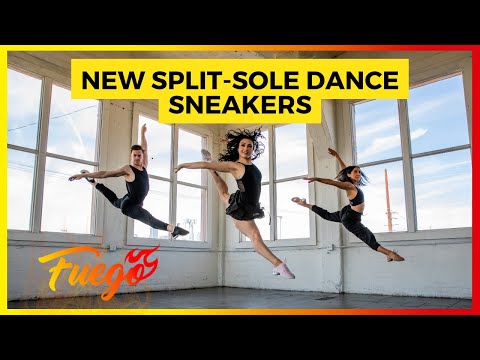
Split-sole styles are the closest match to a traditional jazz shoe — the flexible midfoot lets you articulate through the arch and point cleanly, while still giving you the cushioning and grip of a sneaker. Fuego's latte split-sole is built on the FlowTec™ outsole with dual pivot points, designed specifically for the kind of multidirectional footwork and pivot turns that jazz requires.
The all-black split-sole and white split-sole both work well in jazz contexts and transition from studio to everyday wear without missing a beat.
Keep Moving

The steps you learn this week are the ones you will still be using years from now. Jazz dance builds on itself. The jazz square in your first class is the same jazz square in your most advanced choreography. The ball change never goes away.
Start slow. Practice in front of a mirror. Let the music in. That is the whole foundation.
Explore Fuego's full collection and find the right shoes for every step of your jazz journey.
FAQs
What are the basic jazz dance moves for beginners?
The ten foundational jazz dance moves are: jazz walk, ball change, jazz square, chassé, kick-ball-change, pas de bourrée, pivot turn, plié, isolations, and shimmy. These steps form the building blocks of almost every jazz routine and appear across beginner and advanced choreography.
What is body isolation in jazz dance?
Isolation means moving one part of your body independently while the rest stays still. Shifting your chest to the side without moving your hips, or rolling your head without your shoulders following. It is the defining technique of jazz dance and is practiced from the very first class.
How do you do the jazz square?
Step forward with your right foot. Cross your left foot over the right. Step back with your right foot. Step your left foot out to the side to return to your starting width. That is one complete jazz square. Add upper body attitude and arm movement to make it feel authentic.
What makes jazz dance different from other styles?
Body isolation, rhythmic syncopation, and theatrical personality are the three qualities that define jazz. It is built on a ballet technique base but overlays African American rhythm traditions and individual expression. The result is a style that is both technically demanding and uniquely personal.
What shoes are best for beginner jazz dance?
Dance sneakers with pivot support and a non-marking sole work well for jazz class. Fuego's Split-Sole Collection, built on the FlowTec™ outsole with dual pivot points, handles the pivoting and lateral footwork that jazz requires while staying lightweight and comfortable through a full session.
How long does it take to learn jazz dance basics?
Most beginners feel comfortable with the foundational steps after a few weeks of consistent practice. The jazz square, ball change, and chassé in particular become natural quickly. Body isolation and musicality develop more gradually but improve noticeably with regular classes and practice.